
Why Eco Friendly Smoothie Ingredients Matter for Your Wallet and the Planet
Eco friendly smoothie ingredients are ingredients that are grown, sourced, and used in ways that reduce harm to the environment — think lower carbon emissions, less water waste, fewer pesticides, and minimal food waste.
Here’s a quick overview of the best eco-friendly choices for your blender:
| Ingredient | Why It’s Eco-Friendly |
|---|---|
| Organic spinach | Fast-growing, low-resource crop; avoids harmful pesticide runoff |
| Frozen mango or pineapple | Reduces food waste; often harvested at peak ripeness |
| Oat milk | Lower water use and carbon emissions than dairy or almond milk |
| Chia seeds or flaxseeds | High-yield crops that need very little water |
| Seasonal local fruit (oranges, pears) | Minimal transport emissions; fresher and more nutritious |
| Frozen overripe bananas | Diverts food from landfills; cuts methane emissions |
| Hemp seeds | Sustainable crop with complete protein and omega-3s |
Every smoothie is a small choice. But small choices add up — especially when you’re making one every morning.
The good news? Going greener with your smoothie routine doesn’t mean spending more. In many cases, it actually saves money. Buying seasonal produce, freezing what you don’t use, and swapping a few ingredients can cut both your grocery bill and your environmental footprint at the same time.
This guide walks you through exactly which ingredients to choose, which to swap out, and how to build a smoothie habit that’s good for your body, your budget, and the planet.
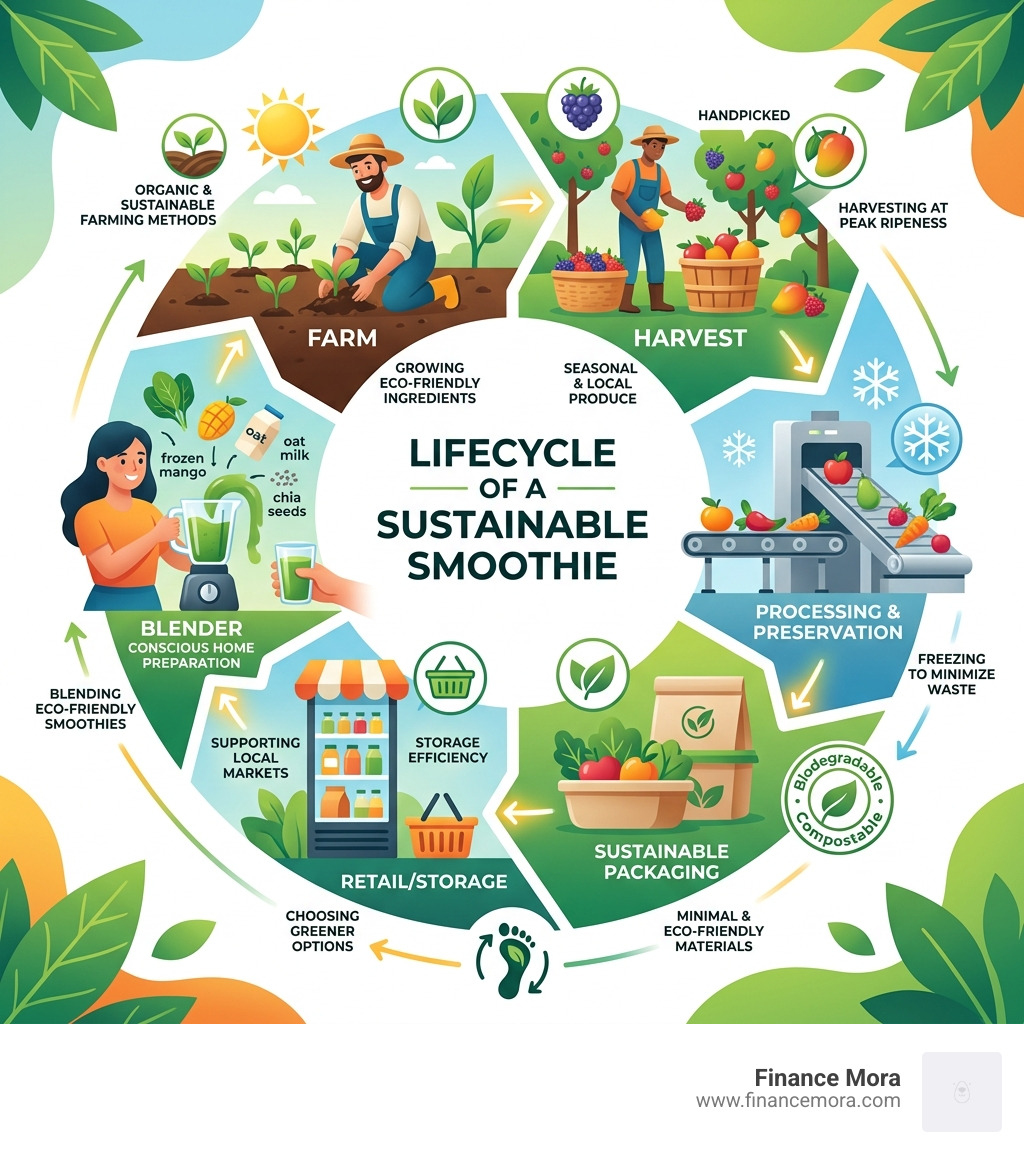
What Defines Eco Friendly Smoothie Ingredients?
As we move through 2026, the definition of a “healthy” smoothie has evolved. It’s no longer just about what the drink does for our waistlines; it’s about what the ingredients do to the earth. To us at Finance Mora, an eco-friendly ingredient is one that supports a circular economy and protects our natural resources.
Key pillars of eco friendly smoothie ingredients include:
- Regenerative Agriculture: This goes beyond “sustainable.” It refers to farming practices that actually improve soil health, increase biodiversity, and help trap carbon in the ground.
- Water Stewardship: Some crops are “thirstier” than others. Choosing ingredients that require less irrigation—especially in drought-prone areas—is a vital part of being a green consumer.
- Low-Carbon Transport: The “food miles” attached to your frozen dragon fruit matter. Sourcing items that haven’t traveled halfway across the globe reduces the greenhouse gas emissions associated with shipping.
- Pesticide-Free Farming: Reducing chemical use protects local ecosystems, pollinators like bees, and the farmworkers who grow our food.
When we look at the Best and Worst Smoothie Ingredients, we see that the most sustainable options often overlap with the most nutrient-dense ones. By focusing on soil integrity and seasonal availability, we ensure that our morning fuel is as clean as possible.
Sourcing Local and Seasonal Produce
One of the easiest ways to green your routine is to shop the perimeter of your local farmers’ market. When we buy local, we are cutting out the middleman and the massive carbon footprint of long-haul trucking.
Community Supported Agriculture (CSA) programs are fantastic for this. You get a “share” of a local farm’s harvest, which means you’re eating produce at its peak ripeness. Not only does this mean better flavor for your Green Smoothie Recipe, but it also means the nutrients haven’t degraded during weeks of transport. From a financial perspective, buying what is in season is almost always cheaper than buying imported, out-of-season fruit.
The Impact of Organic vs. Conventional
You might have heard of the “Dirty Dozen” list. This is a ranking of produce with the highest pesticide residues. Spinach, a smoothie staple, frequently tops this list. Choosing organic spinach is a high-impact move; it prevents synthetic chemicals from entering the water table and protects the biodiversity of the soil.
While organic produce can sometimes carry a higher price tag, we view it as an investment in long-term ecosystem protection. If your budget is tight, prioritize buying organic for the “Dirty Dozen” and stick to conventional for items with thick skins, like oranges or pineapples, which typically have lower residue levels.
Top Sustainable Fruits and Vegetables for Your Blender
Not all produce is created equal when it comes to environmental impact. Some crops are incredibly resource-efficient, producing high yields with very little intervention.

Eco Friendly Smoothie Ingredients: The Power of Greens
Leafy greens are the backbone of any nutrient-dense drink. Spinach and kale are standout eco friendly smoothie ingredients because they are fast-growing and can be cultivated in a wide variety of climates, reducing the need for long-distance shipping.
According to this Healthy Green Smoothie Recipe (high-fiber & tropical flavor!), greens like spinach are mild enough that you won’t even taste them when paired with fruit. Beyond the vitamins, these greens are resource-efficient. Kale, for instance, is incredibly hardy and requires relatively little water compared to other cash crops. To maximize the benefits, pairing greens with vitamin C-rich fruits (like citrus) helps your body with iron absorption.
Low-Impact Tropical Alternatives
We all love a tropical vibe, but pineapples and mangoes often travel long distances. To keep it eco-friendly, look for “fair-trade” or “upcycled” certifications. Upcycled produce uses “ugly” fruit that grocery stores would otherwise reject, preventing food waste at the source.
Frozen pineapple is a secret weapon for a sustainable kitchen. It contains bromelain enzymes that aid digestion and provides a thick, creamy texture without the need for dairy. Buying these in bulk and keeping them in the freezer ensures you always have a high-yield, nutrient-dense base ready to go.
Sustainable Swaps for Common Smoothie Staples
If you’re looking to lower your environmental impact in 2026, your liquid base is the best place to start.
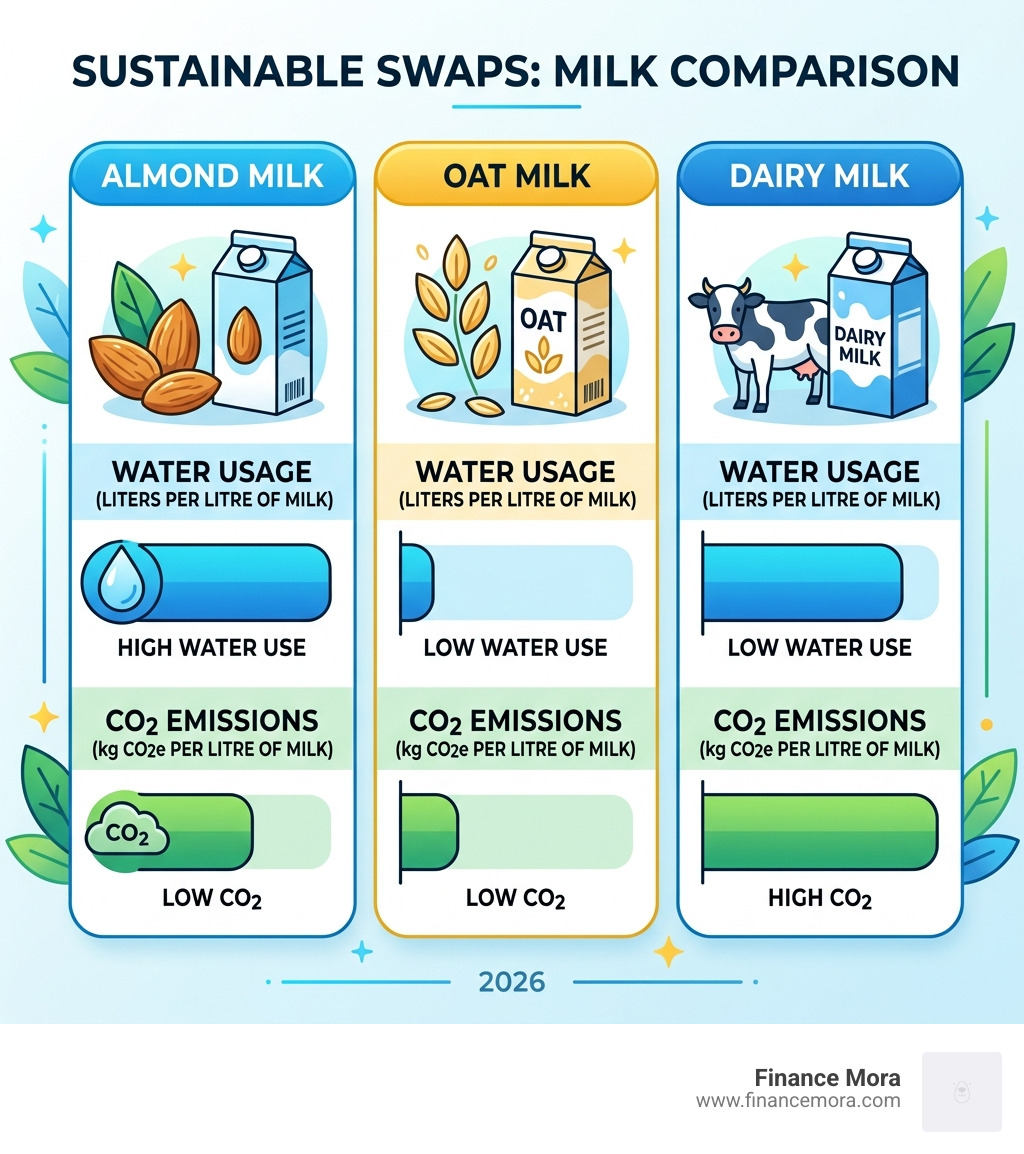
As shown in the data, dairy milk has a significantly higher carbon and water footprint than plant-based alternatives. However, even among plants, there are better choices. Almond milk, while popular, is notoriously water-intensive, often grown in water-stressed regions like California.
For a more sustainable swap, consider:
- Oat Milk: Low water usage and low land requirements.
- Coconut Milk: Often has a lighter carbon footprint and provides a rich, creamy texture.
- Cashew Milk: A great middle-ground that offers healthy fats with less water than almonds.
Learning what are the best eco-friendly practices for making vegan smoothies in 2026 often involves moving toward these low-impact bases.
Choosing Eco Friendly Smoothie Ingredients for Protein and Fats
Forget the plastic tubs of highly processed whey protein. Many animal-derived proteins carry a heavy environmental load. Instead, look toward seeds and legumes.
- Hemp Seeds: Often called a “supercrop,” hemp grows like a weed, requires no pesticides, and returns nutrients to the soil. It’s a complete protein and a top recommendation in these 7 Superfoods That Can Upgrade Your Morning Smoothie.
- Pea Protein: Peas are nitrogen-fixing plants, meaning they actually improve the soil they grow in, reducing the need for chemical fertilizers.
- Chia and Flaxseeds: These are high-yield crops that provide essential Omega-3 fatty acids sustainably.
Replacing High-Water Crops
Avocados are delicious and provide heart-healthy fats, but they are often imported and require significant water. If you want that same creaminess without the footprint, try adding a handful of soaked oats or a spoonful of sunflower seed butter. Sunflower seeds are much more drought-tolerant than almonds or avocados and provide excellent satiety.
Strategies to Eliminate Food Waste in Your Routine
Food waste is a major contributor to global methane emissions. When organic matter rots in a landfill, it releases gases far more potent than CO2. Smoothies are perhaps the ultimate tool for a zero-waste kitchen.

The Benefits of Freezing Produce
Don’t throw away those “spotty” bananas! Overripe fruit is actually better for smoothies because the sugar content is higher, providing natural sweetness. By flash-freezing overripe produce, you “lock in” the nutrients at their peak and prevent them from ending up in the trash.
We recommend creating “smoothie packs” on the weekend. Portion out your greens, fruits, and seeds into reusable silicone bags. This supports How to Make a Sustainable Smoothie (4 Seasonal Recipes!) by ensuring nothing goes to waste and your busy mornings are seamless.
Creative Uses for Blender Pulp
If you make your own nut milk or use a juicer-style blender, don’t toss the pulp! That leftover fiber is a goldmine for a circular food system. You can:
- Mix almond pulp into pancake batter or energy balls.
- Dehydrate vegetable pulp to make savory crackers.
- Add it to soups as a natural thickener.
- If you absolutely can’t use it, make sure to compost it to return those nutrients to the earth.
Beyond the Glass: Sustainable Blending Practices
Making your routine eco-friendly goes beyond just the eco friendly smoothie ingredients. How you blend matters too.
Using a high-efficiency blender can reduce energy consumption over time. If you’re in a position to invest, look for brands with long warranties and repairable parts—this prevents “e-waste” in the long run.
Other “green” blending habits we love:
- Bulk Purchasing: Buy your seeds, grains, and frozen fruits in the largest quantities possible to reduce packaging waste.
- Refill Stations: Many modern grocery stores now offer refill stations for things like maple syrup, honey, and even nut butters.
- Plastic-Free Storage: Transition to stainless steel straws and glass jars. Not only are they better for the planet, but they also don’t leach chemicals into your acidic fruit drinks.
For a fun twist on the traditional drink, try a Go Green Smoothie Bowl Recipe. Eating with a spoon can actually help with digestion by encouraging you to eat slower, and it’s a great way to use up those pantry toppings like hemp hearts and goji berries.
Frequently Asked Questions about Eco-Friendly Smoothies
Are frozen fruits as healthy as fresh produce?
Yes! In many cases, they are healthier. Frozen fruits are usually picked at peak ripeness and immediately flash-frozen, which preserves their vitamin and antioxidant content. Fresh produce often sits in transport or on store shelves for days or weeks, losing nutrients along the way. Plus, frozen fruit acts as a natural thickener, eliminating the need for ice cubes that can water down the flavor.
Which plant milk has the lowest environmental impact in 2026?
Oat milk and hemp milk currently lead the pack in 2026 for the lowest environmental impact. They require significantly less water than almond milk and have lower greenhouse gas emissions than soy or dairy. If you want to be a true eco-warrior, making your own oat milk at home is the gold standard—it eliminates packaging and transport emissions entirely.
How can I make my smoothie routine more affordable and sustainable?
The best way to save money and the planet is to buy in season and freeze the excess. Buy a large flat of strawberries in the summer when they are cheap and local, then freeze them for winter use. Additionally, swapping expensive “superfood” powders for whole seeds like flax or chia can save you hundreds of dollars a year while providing the same (or better) nutritional benefits.
Conclusion
At Finance Mora, we believe that greener living and smarter financial growth go hand in hand. Choosing eco friendly smoothie ingredients isn’t just a trend for 2026; it’s a lifestyle shift that pays dividends for your health and your bank account. By sourcing locally, reducing food waste, and opting for low-impact plant proteins, you are contributing to a more resilient food system.
Sustainable habits don’t have to be complicated. Start by freezing that last brown banana or swapping your almond milk for oat milk. Small, conscious changes in your morning routine lead to a big impact over time.
Start your journey to greener living today by exploring our other guides on sustainable nutrition and financial wellness. Your blender—and the planet—will thank you!
