
Why Heart Healthy Smoothies for Cholesterol Are Worth Your Attention
Heart healthy smoothies for cholesterol are one of the simplest, most affordable ways to start managing your cholesterol through diet — no expensive supplements or complicated meal plans required.
Here’s a quick snapshot of what works:
- Oats — contain beta-glucan, a soluble fiber shown to reduce LDL cholesterol by 5–10%
- Berries — rich in antioxidants and pectin that help block cholesterol absorption
- Avocado — monounsaturated fats that lower LDL while raising HDL
- Flaxseeds — packed with omega-3s and fiber to reduce inflammation
- Spinach — helps your body produce nitric oxide, which supports artery health
- Chia seeds — two tablespoons deliver around 10 grams of fiber
Blend any combination of these into a 5-minute breakfast and you’re already ahead of most Americans, who average just 10–15 grams of fiber daily — well below the recommended 25–36 grams.
High cholesterol is a bigger problem than most people realize. Nearly 86 million US adults over the age of 20 have high cholesterol. Many don’t know it until something goes wrong.
The good news? Diet makes a real difference. And smoothies are one of the easiest ways to pack cholesterol-fighting nutrients into your day — especially if you’re busy.
This guide walks you through the best ingredients, simple recipes, and practical tips to make heart-healthy smoothies a sustainable daily habit.
The Link Between Diet and Cholesterol Management
To understand why we are so passionate about heart healthy smoothies for cholesterol, we first need to look at what cholesterol actually is. It’s a waxy, fat-like substance that our livers produce naturally. We actually need it to build cells and make hormones. The trouble starts when we have too much of the “bad” kind floating around in our blood.
There are two main players here:
- LDL (Low-Density Lipoprotein): Often called “bad” cholesterol. Think of LDL as a messy delivery truck that drops off fat in your arteries. Over time, this builds up into plaque, a process called atherosclerosis. This narrows your “pipes,” making it harder for blood to flow and increasing the risk of heart attacks.
- HDL (High-Density Lipoprotein): This is the “good” kind. HDL acts like a vacuum cleaner, picking up excess cholesterol and taking it back to the liver to be flushed out of the body.
When we talk about managing cholesterol, our goal is to lower the LDL and maintain or raise the HDL. According to research, high cholesterol affects nearly 86 million US adults, yet many of us only consume 10-15 grams of fiber a day. That is a problem because fiber is one of our best natural defenses. Scientific research on soluble fiber and LDL reduction shows that simply hitting our fiber goals can reduce cholesterol by 5-10%.
| Cholesterol Type | Nickname | Function | Goal |
|---|---|---|---|
| LDL | Bad | Deposits fat in artery walls (plaque) | Lower is better (<100 mg/dL) |
| HDL | Good | Removes fat from blood to the liver | Higher is better (>40 mg/dL) |
| Triglycerides | – | Fats used for energy | Lower is better (<150 mg/dL) |
By choosing specific ingredients for our smoothies, we can actively help our bodies “vacuum” out the bad stuff.
Top Ingredients for Your Heart Healthy Smoothies for Cholesterol
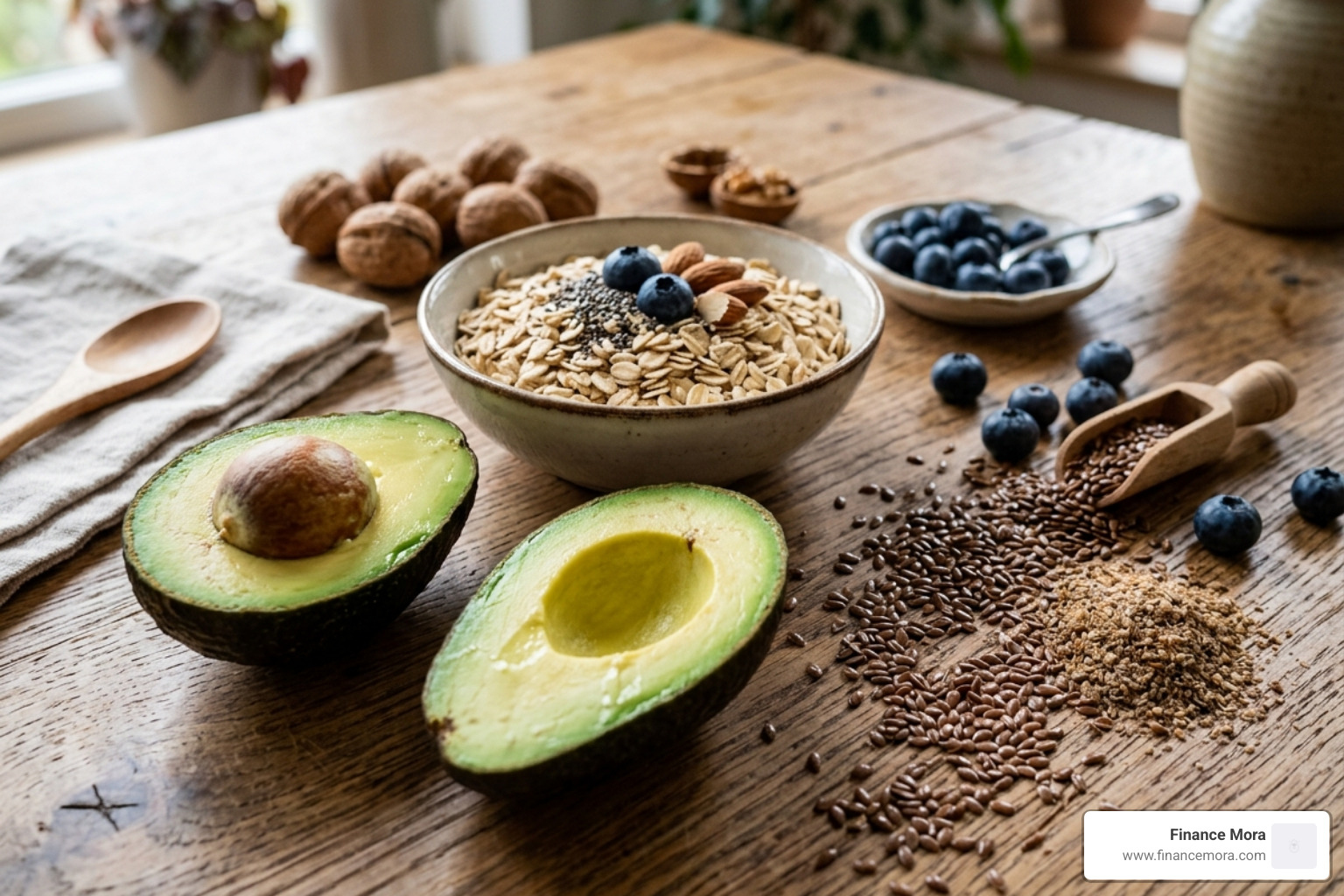
Creating a smoothie that actually moves the needle on your bloodwork requires more than just tossing in some fruit. We want to focus on “functional” foods—ingredients that serve a specific purpose for your heart.
Soluble Fiber: The Secret to Heart Healthy Smoothies for Cholesterol
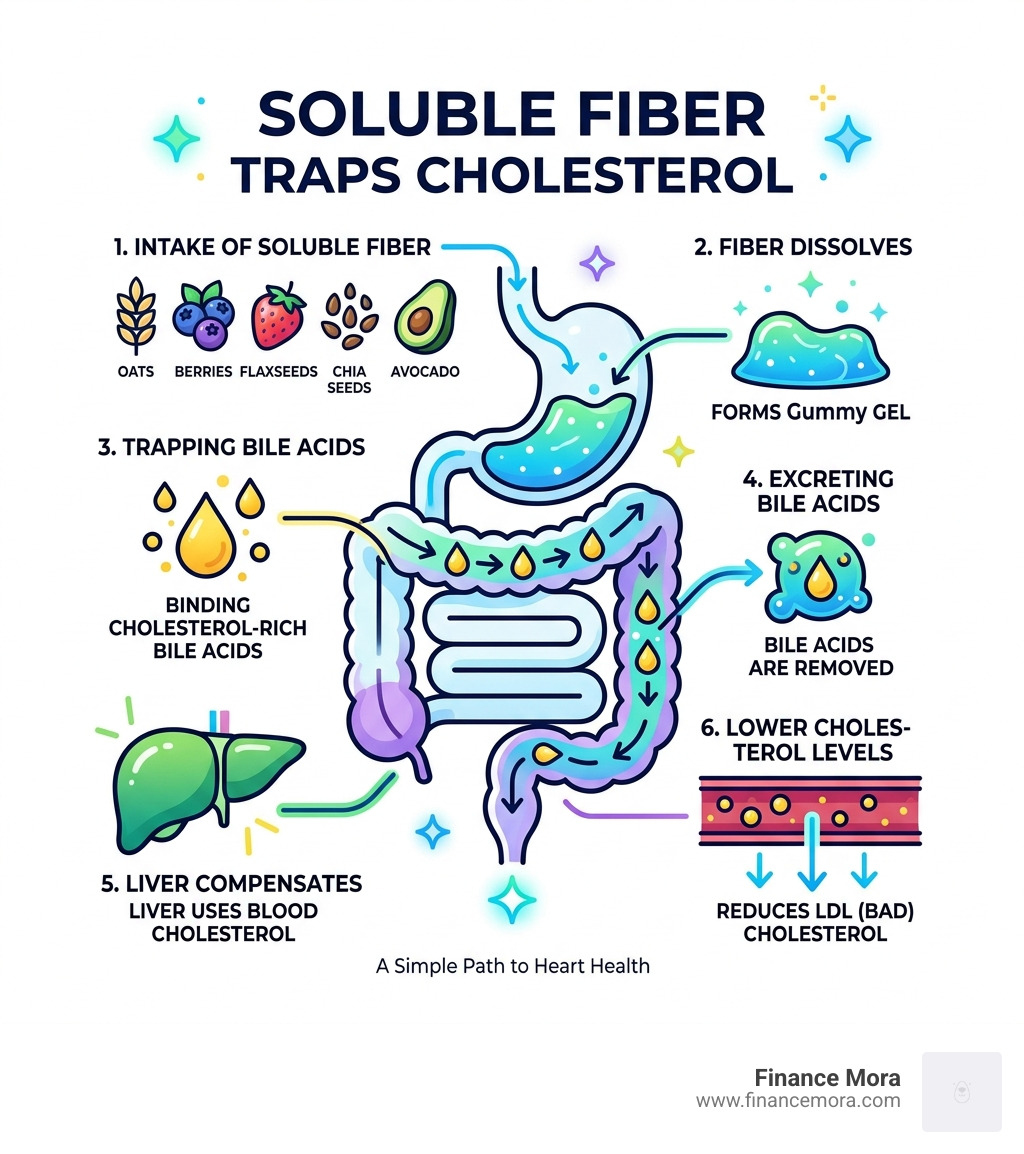
If there is one “magic” ingredient for cholesterol, it is soluble fiber. When you eat soluble fiber, it turns into a gel-like substance in your gut. This gel binds to cholesterol-rich bile acids and drags them out of your body as waste. Since your body needs those bile acids for digestion, it pulls cholesterol from your blood to make more—effectively lowering your blood cholesterol levels.
- Rolled Oats: These are a powerhouse. They contain beta-glucan, a specific type of fiber that is a superstar at lowering LDL. Adding just half a cup of oats to your blender provides about 4 grams of fiber.
- Chia and Flaxseeds: These tiny seeds are heavy hitters. Two tablespoons of chia seeds offer a staggering 10 grams of fiber. Always use ground flaxseed, as our bodies can’t digest the whole seeds to get the benefits.
- Pectin-rich Fruits: Apples and citrus fruits contain pectin, another form of soluble fiber that helps keep cholesterol levels in check.
Antioxidants and Healthy Fats for Heart Protection
While fiber does the heavy lifting, antioxidants and fats provide the support system.
- Berries: Blueberries, strawberries, and raspberries are rich in anthocyanins. These antioxidants prevent LDL cholesterol from oxidizing (turning into the dangerous form that sticks to artery walls). In fact, the Heart-Healthy Mixed Berry Smoothie nutrition profile shows that you can get a massive dose of these protectors with very few calories.
- Avocado: This adds a beautiful creaminess without the need for dairy. Avocados are full of monounsaturated fats and plant sterols, which help lower LDL while supporting HDL.
- Walnuts: These are unique because they contain high levels of omega-3 fatty acids, which reduce inflammation in the cardiovascular system.
- Spinach: Leafy greens are rich in lutein and help the body produce nitric oxide. Nitric oxide is essential because it helps your arteries relax and stay flexible, which improves blood flow.
5 Easy Recipes to Lower Your Levels

We know life in April 2026 is busy. You don’t have time for a 20-ingredient recipe. These five blends take less than five minutes and use ingredients you can find at any grocery store.
Quick Recipes for Heart Healthy Smoothies for Cholesterol
Berry-Avocado Bliss:
- 1 cup frozen mixed berries
- 1/2 an avocado
- 1 cup unsweetened soy milk (soy protein is great for LDL)
- 1 tbsp ground flaxseed
- Why it works: Combines anthocyanins with healthy monounsaturated fats.
Green Apple Oat:
- 1 small apple (cored, skin on for pectin)
- 1/4 cup rolled oats
- 1 cup spinach
- 1/2 cup low-fat Greek yogurt
- A splash of water or almond milk
- Why it works: High in beta-glucan and pectin.
Anti-Inflammatory Beet:
- 1/2 a small beet (raw or steamed)
- 1 cup strawberries
- 1 tbsp chia seeds
- 1 cup unsweetened almond milk
- Why it works: Beets provide nitrates that dilate blood vessels, while strawberries fight inflammation.
Tropical Flax:
- 1/2 cup frozen mango or pineapple
- 1/2 a banana
- 2 tbsp ground flaxseed
- 1 cup coconut water (for hydration and potassium)
- Why it works: High potassium from the banana helps manage blood pressure.
Spinach-Banana Protein:
- 1 frozen banana (makes it creamy!)
- 2 cups fresh spinach
- 1 scoop plant-based protein powder (or 1/2 cup Greek yogurt)
- 1/2 cup frozen riced cauliflower (we promise you won’t taste it!)
- Why it works: Packs in veggies and fiber without the sugar spike.
Customizing for Dietary Needs
We believe in inclusive eating. If you have specific dietary requirements, these smoothies are incredibly flexible:
- Vegan: Use soy, almond, or oat milk and swap Greek yogurt for silken tofu or a plant-based alternative.
- Gluten-Free: Ensure your oats are certified gluten-free.
- Nut-Free: Swap almond butter or walnuts for sunflower seed butter or extra chia seeds.
- Creaminess without the Fat: If you want that milkshake texture without the calories, try adding 1/2 cup of frozen riced cauliflower. It adds bulk, fiber, and sulforaphane (a heart-protecting compound) without changing the flavor.
Tips for Making Your Smoothies More Effective
To get the most out of your heart healthy smoothies for cholesterol, consistency is key. Here are our top “pro tips” for making this habit stick:
- Use Frozen Produce: Frozen fruits and vegetables are often frozen at peak ripeness, locking in nutrients. They also eliminate the need for ice, which can water down the flavor. Keeping your freezer stocked means a healthy meal is always 60 seconds away.
- Avoid Added Sugars: Many store-bought smoothies are “sugar bombs.” Stick to the natural sweetness of fruit. If you need a little extra kick, a dash of cinnamon can help manage blood sugar and add flavor.
- Batch Prep Your Packs: Spend 10 minutes on Sunday putting your dry and frozen ingredients into silicone bags or jars. In the morning, just dump the bag into the blender, add your liquid, and go.
- Balance Your Macros: A smoothie that is only fruit will leave you hungry an hour later. Always include a source of protein (yogurt, protein powder) and healthy fat (seeds, nuts, avocado) to keep you full until lunch.
- Hydrate: Fiber needs water to move through your system. If you increase your fiber intake via smoothies, make sure you’re drinking plenty of water throughout the day to avoid digestive discomfort.
Frequently Asked Questions about Cholesterol Smoothies
When is the best time to drink a heart-healthy smoothie?
Most of our readers find that breakfast is the best time. Starting your day with a high-fiber, nutrient-dense meal sets a positive tone for your other food choices. However, a smoothie can also be a fantastic post-workout snack or a light lunch if you’re on the move.
Can I meal prep these smoothies for the entire week?
Yes! You can blend a large batch and store it in the fridge for 1-2 days in an airtight mason jar. If it separates, just give it a good shake. For longer storage, we recommend “smoothie packs”—pre-measuring the solid ingredients and freezing them so you can blend them fresh each morning.
How long does it take to see results in my cholesterol levels?
While everyone is different, most clinical studies on dietary changes (like increasing soluble fiber) show measurable improvements in LDL cholesterol within 4 to 12 weeks. Consistency is the most important factor—drinking one smoothie won’t fix high cholesterol, but making it a daily habit will.
Conclusion
At Finance Mora, we are all about smarter financial growth and greener living. Managing your health is, in many ways, the ultimate financial investment. By lowering your cholesterol naturally through heart healthy smoothies for cholesterol, you are reducing future medical costs and ensuring you have the energy to pursue your goals.
Using sustainable, whole-food ingredients like oats, seeds, and frozen berries is not only good for your heart but also kind to your wallet and the planet. We encourage you to start small—try replacing just one breakfast a week with one of these recipes and see how you feel.
For more tips on living a balanced, sustainable, and heart-healthy life, explore More info about heart-healthy living. Your heart (and your future self) will thank you.
