
How to Build a Better Smoothie Without the Calorie Bomb
Why Your Smoothie Ingredients Matter More Than You Think
Low calorie smoothie ingredients can make the difference between a 90-calorie health boost and a 1,000-calorie mistake — yes, some commercial smoothies really do hit that mark.
Here are the best low calorie smoothie ingredients to get you started:
| Category | Best Choices | Approx. Calories |
|---|---|---|
| Liquid Base | Unsweetened almond milk (1 cup) | 35 cal |
| Greens | Spinach (1 cup) | 7 cal |
| Fruit | Strawberries, blueberries, raspberries (½ cup) | 25–40 cal |
| Protein | Powdered peanut butter (2 tbsp) | 50 cal |
| Fiber Add-In | Chia seeds or flaxseed (1 tsp) | 15–20 cal |
| Flavor Boost | Unsweetened cocoa powder (1 tbsp) | 17 cal |
The idea is simple: choose ingredients that give you maximum nutrition for minimal calories.
Smoothies are genuinely one of the easiest ways to eat well on a busy schedule. But the wrong ingredients — flavored yogurts, fruit juice bases, sweetened nut butters — can quietly turn a “healthy” drink into a calorie bomb. A single stop at a smoothie shop can add close to 2,500 extra calories to your week without you even realizing it.
The good news? With the right building blocks, you can make a thick, filling, delicious smoothie for well under 200 calories — and often under 100.
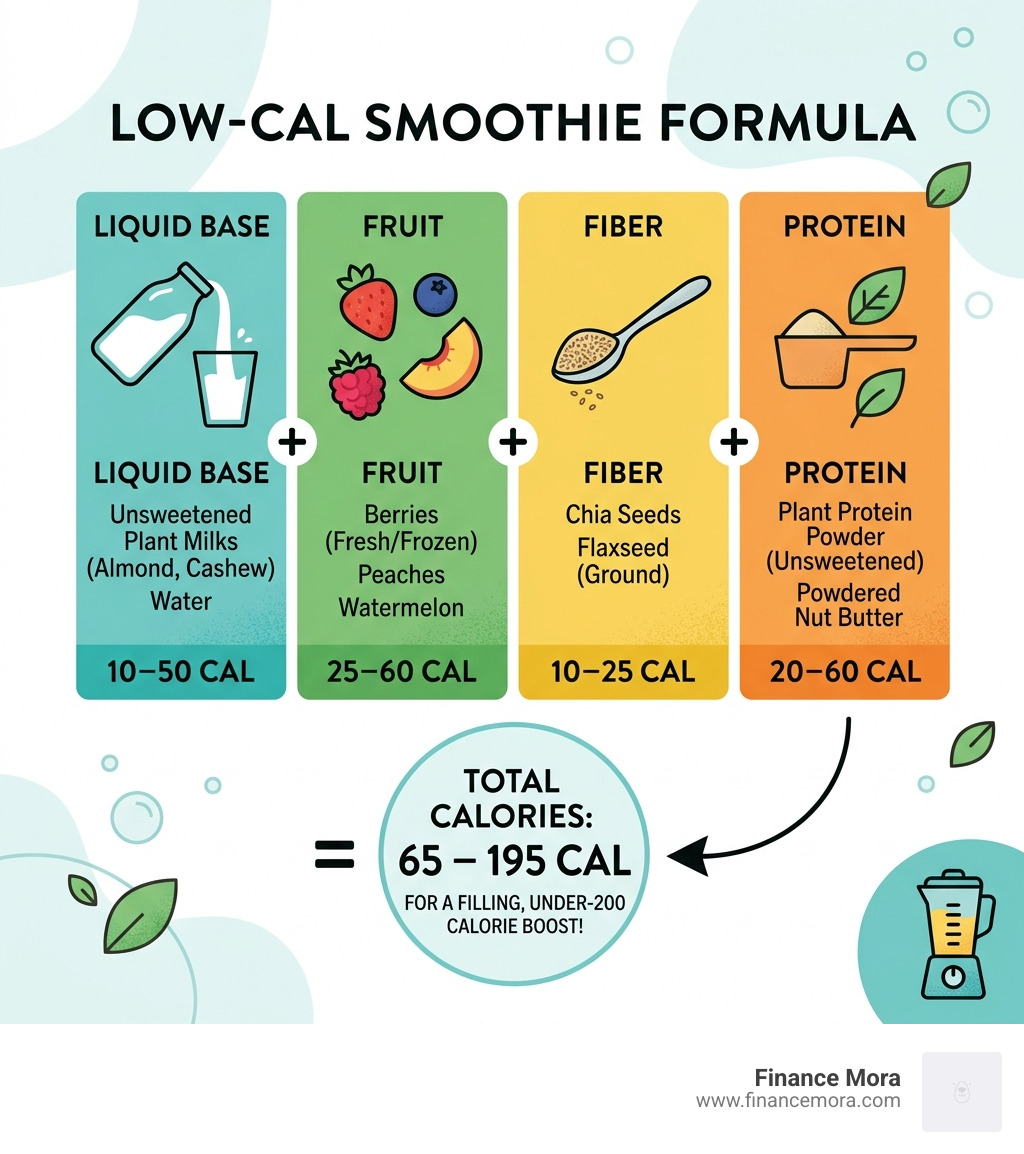
The Essential Low Calorie Smoothie Ingredients for Your Base
The foundation of any great drink is the liquid. Many people default to orange juice or apple juice, but these are essentially “sugar water” without the fiber of the whole fruit. If we want to keep things light, we need to look at unsweetened, plant-based alternatives.
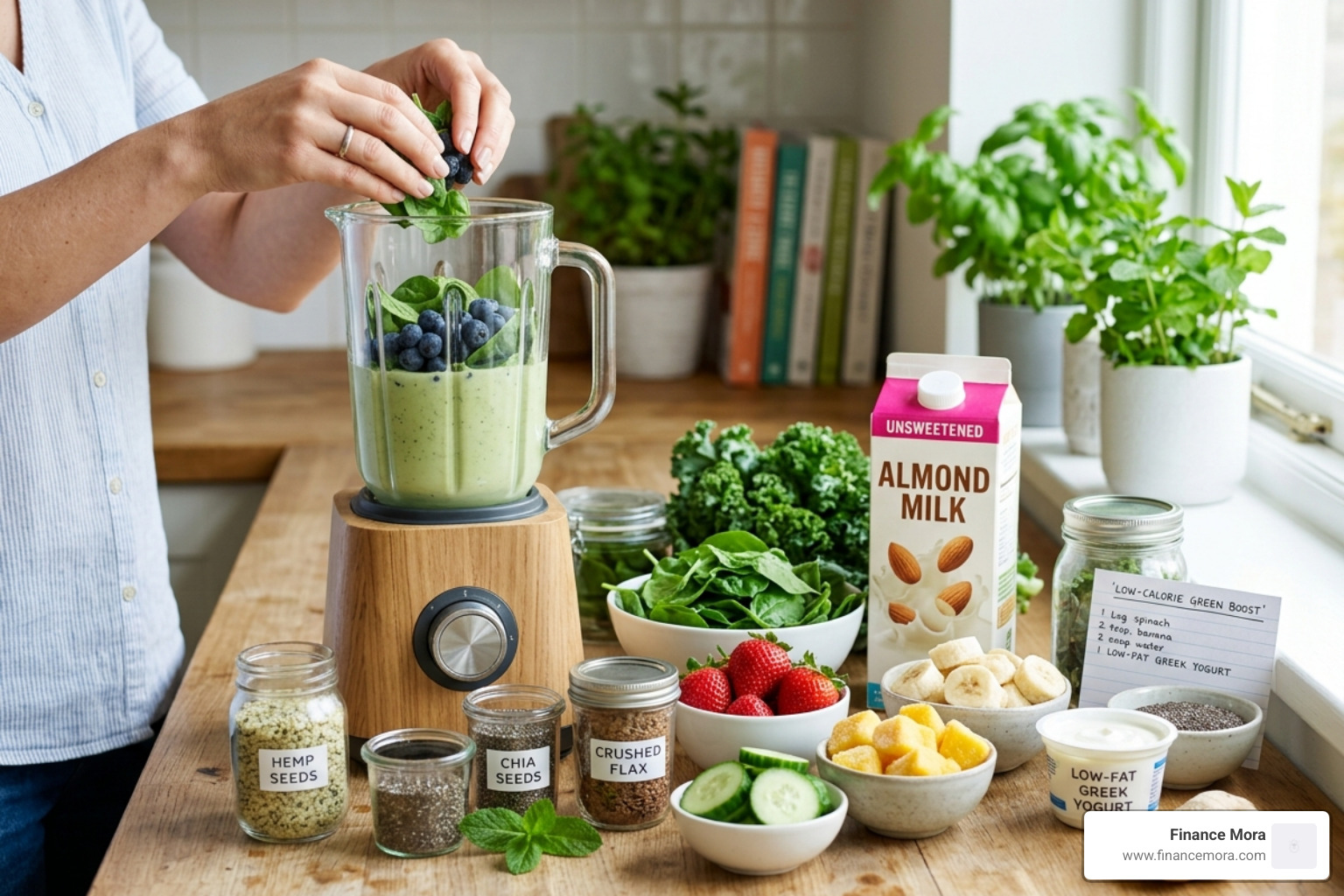
- Unsweetened Almond Milk: This is the gold standard for low calorie smoothie ingredients. At only 35 calories per cup, it provides a creamy texture for less than half the calories of skim milk.
- Coconut Water: Great for hydration and a tropical flair, coconut water usually clocks in around 45–60 calories per cup. It’s rich in electrolytes, making it a perfect post-workout base.
- Plain Water: If you are strictly watching calories, you can’t beat zero. Using water allows the flavors of your fruit and protein to shine through without any added bulk.
- Cashew Milk: Unsweetened cashew milk is incredibly creamy and often has only 25 calories per cup, making it even lighter than almond milk in some cases.
When we compare these to traditional bases, the choice is clear. Skim milk has about 80–90 calories per cup, and soy milk can range from 80 to 130 calories depending on the brand. If you’re looking for 10 Low Calorie Smoothie Recipes, you’ll notice that the most successful ones almost always prioritize these low-energy-density liquids to keep the total count under 150 calories.
Low Calorie Smoothie Ingredients: The Best Veggie Swaps
Vegetables are the “secret weapon” of the smoothie world. They add volume, fiber, and micronutrients without the sugar surge. If you use the right blending techniques, you won’t even taste them.
| Vegetable | Calories per Cup | Primary Benefit |
|---|---|---|
| Spinach | 7 | Mild flavor, high in Vitamin K |
| Cucumber | 16 | Extremely hydrating, crisp taste |
| Zucchini | 20 | Adds creaminess when frozen |
| Kale | 33 | High fiber, dense nutrition |
| Cauliflower Rice | 25 | Adds thickness and “frosty” texture |
Spinach is the best “beginner” green because it wilts into nothingness and loses its flavor when paired with fruit. For those looking for more texture, frozen cauliflower rice or peeled zucchini are game-changers. Because they are neutral in flavor, they act as a thickener, mimicking the creaminess of a banana for a fraction of the calories.
High-Protein Low Calorie Smoothie Ingredients
Protein is what turns a snack into a meal. It provides satiety, meaning you won’t be reaching for a snack thirty minutes after finishing your glass. However, protein sources can be calorie-dense if you aren’t careful.
We recommend non-fat Greek yogurt, which offers about 12–15 grams of protein for roughly 100–130 calories per cup. It also provides probiotics for gut health. If you prefer powders, whey protein is highly bioavailable for muscle repair, while pea protein is a top-tier vegan choice that absorbs better than most other plant-based options.
Another “miracle” ingredient is powdered peanut butter. Traditional peanut butter is delicious but packs 190 calories in just two tablespoons. The powdered version removes the oil, giving you that same nutty flavor and 6 grams of protein for only 50 calories. For a complete recipe that balances these elements, the Low Calorie Power Greens Smoothie is an excellent starting point for muscle maintenance and satiety.
Choosing Fruits Wisely for Natural Sweetness
Fruit is where the flavor lives, but it’s also where the sugar lives. To build a better smoothie, we need to focus on fruits with a lower glycemic index and high fiber content.

Berries are your best friend. Strawberries, blueberries, and raspberries are low in calories but high in antioxidants and polyphenols, which may support fat metabolism. A half-cup of strawberries is only about 25 calories!
Frozen mango and peaches are fantastic for creating a dessert-like, creamy consistency. While slightly higher in sugar, using them in moderation (about 1/2 cup) provides a lush texture. Green apples add a tart crispness and plenty of fiber, which helps slow down the absorption of sugar into your bloodstream.
Expert Tip: Always use frozen fruit instead of fresh fruit plus ice. Frozen fruit acts as the “ice,” creating a thick, “soft-serve” texture without watering down the flavor. Just be sure to check the labels on frozen bags to ensure there is no added sugar or syrup.
Avoiding Common Calorie Bombs and Hidden Sugars
It is shockingly easy to accidentally create a “milkshake” when you intended to make a smoothie. The most common culprit is flavored yogurt. A “strawberry” yogurt often contains more sugar than a candy bar. Stick to plain, non-fat versions and add your own fruit.
Other hidden calorie bombs include:
- Honey and Maple Syrup: Even “natural” sugars add up quickly. One tablespoon of honey is 64 calories.
- Excessive Nut Butters: It’s easy to “eyeball” a tablespoon and actually scoop out three, adding 300 calories to your drink.
- Dried Fruits: Dates and raisins are concentrated sugar. While a single date can sweeten a whole blender, adding five or six will skyrocket the calorie count.
- Avocado: While healthy, a whole avocado is roughly 250–320 calories. Stick to a quarter of an avocado for creaminess without the bomb.
According to Healthy Smoothie Ingredients and Recipes | Hungry Girl, mindful ingredient measuring is the only way to be sure of your intake. Using a digital scale or actual measuring spoons rather than “guessing” can save you hundreds of calories a week.
Smart Prep and Storage for Sustainable Healthy Eating
At Finance Mora, we believe that sustainable living and financial health go hand-in-hand. Buying ingredients in bulk and prepping them at home is significantly cheaper than hitting a smoothie bar daily.
Meal Prep Smoothie Packs: Spend 20 minutes on Sunday portioning your greens, fruits, and seeds into reusable freezer bags. In the morning, all you have to do is dump the bag into the blender, add your liquid base, and go. This reduces food waste by using up greens before they wilt and ensures you always have a healthy option ready.
The Right Tools: A high-speed blender like a Vitamix or Blendtec is an investment, but it’s one that pays off. These machines can pulverize fibrous kale and frozen cauliflower into a silky-smooth liquid. If your blender is less powerful, try blending your greens and liquid first to remove chunks before adding the frozen fruit.
For storage, most Low Calorie Smoothies are best enjoyed fresh. However, you can store a blended smoothie in the fridge for up to 24–48 hours in an airtight jar. If it separates, just give it a quick shake.
Frequently Asked Questions about Low-Calorie Smoothies
Are low-calorie smoothies effective for weight loss?
Yes, provided they are part of a calorie deficit. Smoothies are excellent for weight loss because they allow for high nutrient absorption and high fiber intake, which keeps you full. They are also very helpful for those on a GLP-1 diet (like Wegovy or Ozempic) who may struggle with appetite or nausea; a cool, nutrient-dense liquid is often easier to tolerate than a heavy meal.
How can I make my smoothie thick without adding many calories?
The secret to a thick, spoonable smoothie isn’t more fruit—it’s less liquid and more “ice” factors. Use frozen zucchini or frozen cauliflower rice to add bulk. You can also add a teaspoon of chia seeds or flaxseeds, which expand in liquid to create a gel-like thickness. Finally, try adding a handful of ice cubes at the very end and blending on high for 30 seconds.
What are the best vegan options for low-calorie smoothies?
For a dairy-free boost, use unsweetened almond or soy milk and plant-based protein powders (pea, rice, or hemp). Silken tofu is another fantastic vegan ingredient that adds incredible creaminess and protein for very few calories. For a “cheesy” or nutty depth in green smoothies, some even add a teaspoon of nutritional yeast.
Conclusion
Building a better smoothie is all about intentionality. By choosing the right low calorie smoothie ingredients, you aren’t just cutting calories; you’re maximizing the vitamins, minerals, and fiber your body needs to thrive.
At Finance Mora, we are dedicated to helping you achieve smarter financial growth and greener living. Making your own smoothies at home is a perfect example of this philosophy: it’s better for your wallet, better for the planet (less plastic waste!), and significantly better for your health. As we move through April 2026, let’s commit to these small, sustainable changes that lead to long-term wellness.
Ready to take control of your nutrition and your budget? Start by swapping out one high-calorie snack for a nutrient-dense, home-blended smoothie today. For more tips on smarter financial growth and greener living, stay tuned to our latest guides!
